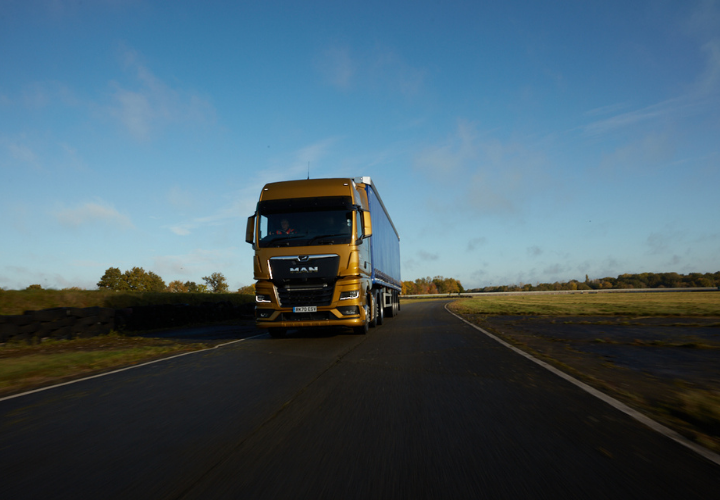

More than six in 10 transport managers say the public does not understand the role of an HGV driver.
And when it comes to road safety, that understanding matters.
HGV drivers are responsible for moving the goods that keep supermarkets stocked, businesses supplied and the country running. But while most motorists share the road with lorries every day, many may not realise just how much space, time and awareness these vehicles need.
Our latest Industry Report, Navigating UK Transport and Logistics in 2026 and Beyond, asked 250 transport and logistics managers what behaviours their HGV drivers most need from other road users to help keep everyone safe.
⚠️ The clearest message? Give HGVs more space.
Why space matters
Unlike cars, HGVs have four areas of limited visibility: front, rear, left and right. That means cars, cyclists and motorcyclists can quickly disappear from view, especially when travelling too closely or moving unpredictably around larger vehicles.
With HGVs weighing up to 44 tonnes, leaving enough room is not just polite road use. It gives professional drivers more time to assess what is happening around them, react safely and manoeuvre with confidence.
According to our research, 40% of transport managers said keeping a safe distance behind HGVs on motorways and dual carriageways was the most important behaviour other road users could adopt. A further 35% said the same applied on smaller roads.
A view from behind the wheel
The habits HGV drivers want to see from other road users are simple, but important.
They include signalling intentions early, allowing more time and space for lorries to turn or change lanes, avoiding cutting in front of HGVs near junctions and slip roads, and giving extra room in poor weather.
These might seem like small changes, but for professional drivers managing heavy vehicles in busy road conditions, they can make a real difference.
David Hallam, Driver for Gist Ltd and winner of our Medium Distance Driver of the Year 2026, said:
“One of the things I enjoy most about the job is knowing you’re playing a part in keeping the country moving, but it also comes with a huge amount of responsibility. Every day you’re thinking ahead, anticipating hazards and making decisions to keep everyone around you safe.
“Most road users are considerate, and the small changes highlighted in this research really can make a difference. Better understanding between HGV drivers and other motorists helps make our roads safer for everyone.”

More understanding, safer journeys
The research also found that more than half of transport managers say their drivers feel undervalued, despite the vital role they play in keeping supply chains moving.
That matters because HGV drivers are not simply operating larger vehicles. They are constantly reading the road, anticipating hazards and making decisions that protect everyone around them.
Commenting on the findings, Microlise CEO Nadeem Raza said:
“Most motorists only spend a few seconds thinking about the HGV beside them, but for professional drivers every decision matters. They are responsible for safely controlling vehicles weighing up to 44 tonnes while sharing increasingly busy roads with cars, cyclists and motorcyclists.
“The encouraging thing is that many of the biggest risks can be reduced through small changes in driver behaviour. Leaving more space, avoiding cutting in front of lorries and recognising the limitations HGV drivers face can make a real difference to safety for everyone on the road.
“HGV drivers aren’t asking for special treatment. They’re simply asking for greater awareness and understanding from other road users so everyone can get home safely.”
What HGV drivers want motorists to do
The top behaviours transport managers said HGV drivers want other road users to adopt are:
- Keep a safe distance behind HGVs
- Signal intentions early, such as lane changes or exits
- Allow more time and space for HGVs to manoeuvre
- Avoid cutting in front of HGVs, especially near junctions or slip roads
- Avoid unnecessary heavy braking in front of a vehicle
- Give vehicles extra space in bad weather
- Give extra space to two vehicles overtaking one another
- Give extra space either side of vehicles on roundabouts
Discover more
These findings form part of our latest Industry Report, Navigating UK Transport and Logistics in 2026 and Beyond, which explores the trends, pressures and opportunities shaping UK transport and logistics.
From driver safety and public perception to sustainability, AI, compliance and operational efficiency, the report takes a closer look at how the industry is changing and where further progress can be made.