




Mental health is a personal, powerful, and poignant topic. One that everyone will have had their own experiences with, and one that feels more prevalent than it has ever been. It’s great to see how important people take mental health now, and that the stigma and taboo around it are slowly changing; however, the stats still read similarly to how they read 5 years ago, and the trend isn’t changing for men.
The State of Men’s Mental Health
Mental health issues among men are a serious and growing concern. In the UK, suicide is disproportionately a male problem: in 2024, the suicide rate for men in England and Wales was 17.6 per 100,000, compared to 5.7 per 100,000 for women.
According to Mental Health UK data, men are about three times more likely to die by suicide than women.
87% of people living on the street are men.
Almost 75% of adults who go missing are men.
Men are nearly three times as likely as women to become dependent on alcohol and three times as likely to report frequent drug use.
Furthermore, while one in five adults in England has a common mental health condition, this breaks down to about 15% of men, compared to 24% of women.
These statistics reflect deeper, systemic issues: social pressures, stigma, under-treatment, and under-reporting all play a role.
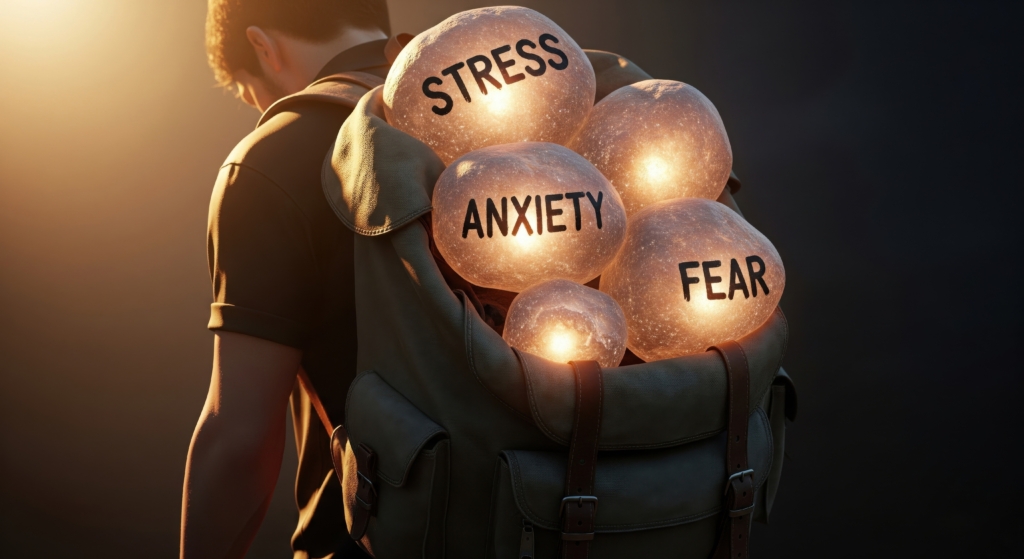

Why Men Struggle to Talk About Mental Health
From a young age, many men are raised with a narrative of “being strong,” “not showing weakness,” and “handling things on your own.” These expectations can make the thought of being emotionally vulnerable, feel dangerous or shameful. Restrictive norms around masculinity – needing to appear in control, emotionless, or invulnerable – contribute directly to poorer mental health outcomes for men.
Modern society and workplace culture can also play a major role. Many men feel that admitting to struggling could jeopardise their job, their reputation, or how they’re perceived by peers, friends, and family.
These narratives build obstacles and put barriers in the way of men acknowledging, talking about, and getting help with their mental health –
- Stigma & Shame: Many men fear being judged, perceived as weak, or losing respect if they admit they’re struggling.
- Lack of Awareness: Sometimes men don’t recognise symptoms of depression or anxiety in themselves; feelings of irritability, fatigue, or emptiness may not immediately register as mental health issues.
- Help-Seeking Behaviour: According to Man-Up No Man Down, only 36% of referrals to talking therapies are from men.
- Practical Constraints: Time, money, and accessibility can all be obstacles, taking time off work, affording therapy, or even knowing where to start.
- Internal Beliefs: Ideas like “I should handle this myself” or “I’ll only burden others” can stop men from reaching out.
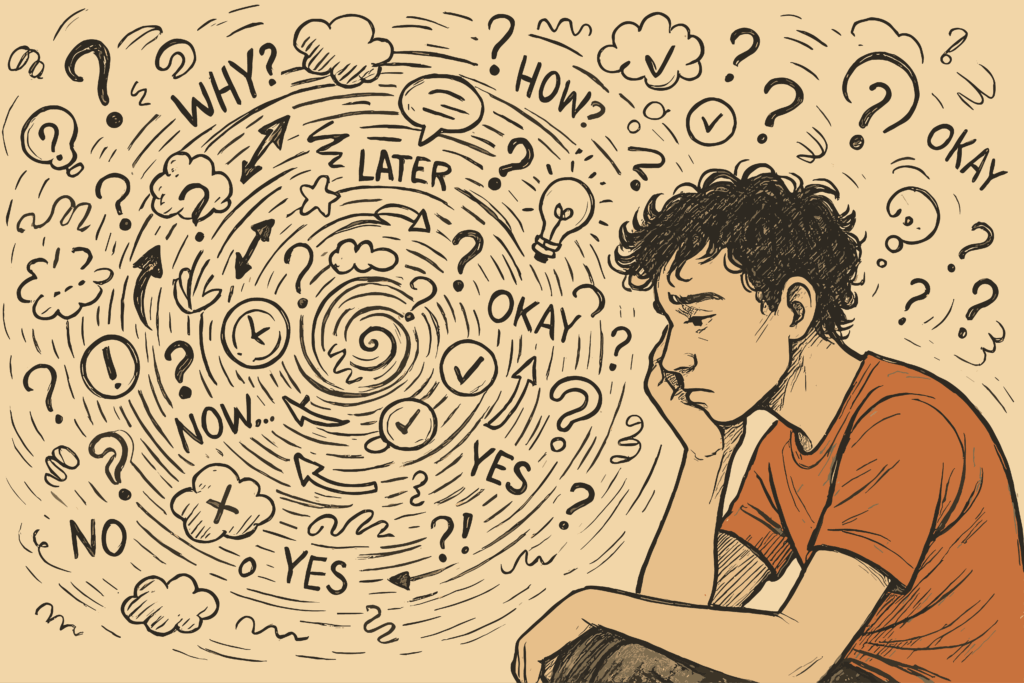

What I Struggled With
I won’t bore you with the details of my experience with mental health because this isn’t about me; but I hope it might help if I write about when I realised that I might need to talk to someone.
A few years ago, I was stood in my kitchen making a brew staring out the window whilst waiting for the kettle to boil. As my mind wandered, I was caught off-guard by one of the few memories I have of my Mum before she passed, and all of a sudden, I had a lump in my throat and tears in my eyes. No biggie, I was alone in the kitchen, nothing to worry about; but then my girlfriend at the time came into the kitchen, and my thoughts immediately jumped to “she can’t see you crying” “hide your face” “she’ll think you’re a baby”.
I swallowed the lump and blinked the tears away, but that was when I recognised my attitude towards mental health was all wrong. I was perpetuating beliefs that I thought I didn’t believe, I had bought in to the same narrative I am now writing about.
This realisation made me start paying more attention to men’s mental health, I started doing research, and speaking to other people about their experiences, I began to change my mind set about my emotions and my mental health, and most importantly, I was learning. And the more I learned, the more I realised that I had been suffering with poor mental health, for quite a while too. I understood that my irritability wasn’t just because I had a short temper, my constantly feeling fatigued wasn’t just because of the lack of sleep, my outward expression of stoicism was just a contrast of how chaotic and hollow I felt inside.
This is when I realised, I should probably speak to someone about the things that have happened in my life, and how they might have impacted me; how my experiences might have shaped how I interact with and perceive the world, and people around me.
I spoke to someone internally at work, who pointed me in the direction of Vitality Health and their counselling service. I had a quick consultation and shortly after began 6 sessions over as many weeks with a trained therapist. All I can say is that speaking about my past and being able to understand more about me, and how I tick has been transformative. I learned to understand more about my feelings, to be comfortable with the uncomfortable, and to challenge the harsh internal narrative that I had been perpetuating internally for too long. It also helped me form more healthy habits; its not always possible but I try to get outside and walk every day after work for at least 20 minutes. I “check-in” on myself, to make sure I acknowledge how I am feeling, and a couple of really close, trusted people I know I could count on if I needed them. Having that support network has made all the difference.
I hope that this might encourage more men to open up and talk about their experiences too!


Encouraging Conversation – A How to Guide
Conversation is a powerful first step. Here’s how to start:
- Normalize check-ins: Encourage men in your life to do regular mental health check-ins. Ask: “How are you, really?” more than once.
- Lead by example: Share your own struggles. Even a small admission, something like “I had a rough week”, can open the door for others.
- Peer support: Suggest peer-led groups (like men’s support networks) where vulnerability is encouraged. These communities can be less intimidating than clinical settings.
- Safe spaces: Create or promote non-judgmental environments – whether that’s social, at work, or in friendship circles – where men can feel okay expressing difficulty.
- Seek professional support: Remember that therapy isn’t a sign of failure; it’s a proactive, helpful step.
Conclusion
Poor mental health is not a weakness or a personal failing – it’s a societal issue that affects everyone, particularly men. The statistics are alarming, but they also point to a hope: if more men feel able to speak up, reach out, and support one another, we can break cycles of silence and shame.
My own journey hasn’t been easy, but asking for help was the turning point. It wasn’t weakness – it was strength. And I firmly believe that by continuing to talk, normalise, and build support systems, we can help more men to feel seen, heard, and understood.
If you’re reading this and you’re struggling, reach out. Use one of the helplines above. Talk to someone – a friend, a partner, a family member. And if you know someone who might be suffering, don’t wait – start the conversation.
Resources & Where to Get Help
Here are several UK-based resources specifically useful for men (and for anyone) struggling with mental health:
- Samaritans – 24/7 listening support: 116 123 (free)
- Mind – Helplines for information, support, and signposting: 0300 102 1234 (support line) and 0300 123 3393 (infoline)
- CALM (Campaign Against Living Miserably) – Dedicated to men, their helpline runs 5pm–midnight: 0800 58 58 58
- Shout – 24/7 crisis text line: text SHOUT to 85258
- James’ Place – Suicide-prevention centres specifically for men 18+ in crisis (London, Liverpool, Newcastle): you can self-refer; they offer 6–8 talking-therapy sessions.
- Men’s Minds Matter – A charity offering mental health service signposting and evidence-based therapy.
- Mental Health Foundation – For advice on talking to your GP, local services, and crisis help.
- Martin’s Mission – Focused on reducing stigma for men talking about mental health, especially in Greater Manchester and Glossop.
*Statistics sourced from Man-up No Man Down, ONS, Mental Health Foundation, and Mental Health UK